
Novae (Svishtov, Bulgaria) : when lamps allow to define a specific cultural “Western Moesian” koinè of the 2nd c. AD
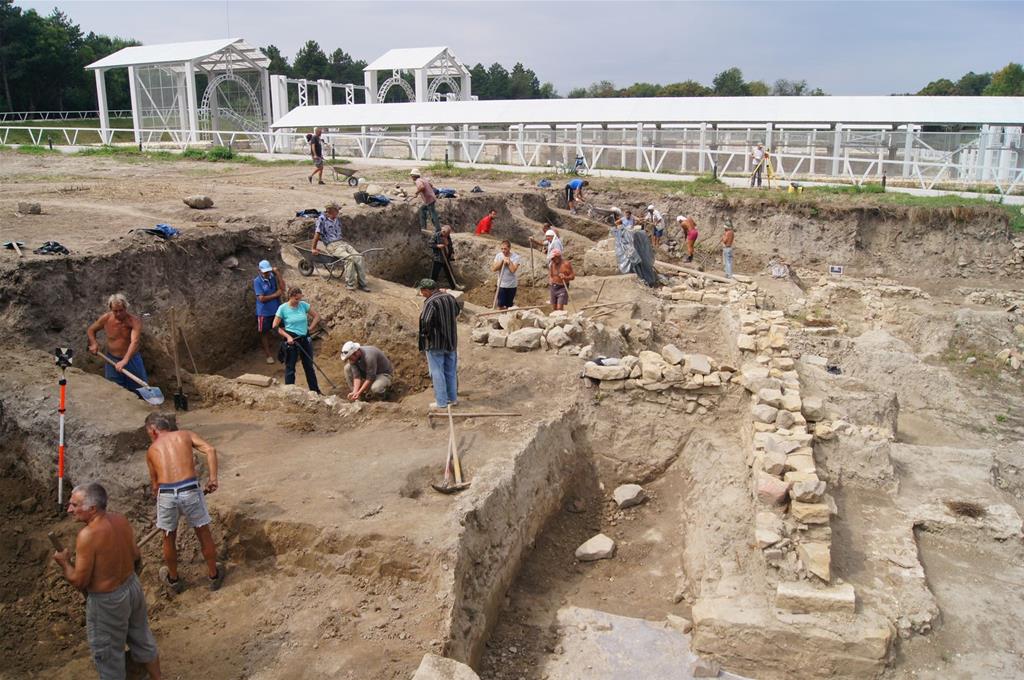
From the late 1st to the mid 3rd century AD, a specific cultural koinè, running from Singidunum to Novae, starts to be unveiled thanks to the new data gathered on the local fashions on some categories of the instrumentum domesticum, where lamps are playing a key role.
In this frame, we focus on a poorly studied subtype of the vast Loeschcke VIII group, which main features are a massive elongated body, a protuberant nozzle, a molded but not pierced handle and a discus adorned systematically by a simple rosette.
On the contrary to all dates proposed before, the Novae excavations allowed to frame the beginning of its production during the last quarter of the 1st century AD, while the workshops created after the foundation of Nicopolis ad Istrum (Butovo, Pavlikeni) adopted the type while embellishing it.
After the catastrophic consequences of the war with the Goths in 250-251, the workshops of Durostorum will perpetuate the type until the mid of the 4th century AD, coming back to its ‘ primordial’ form.
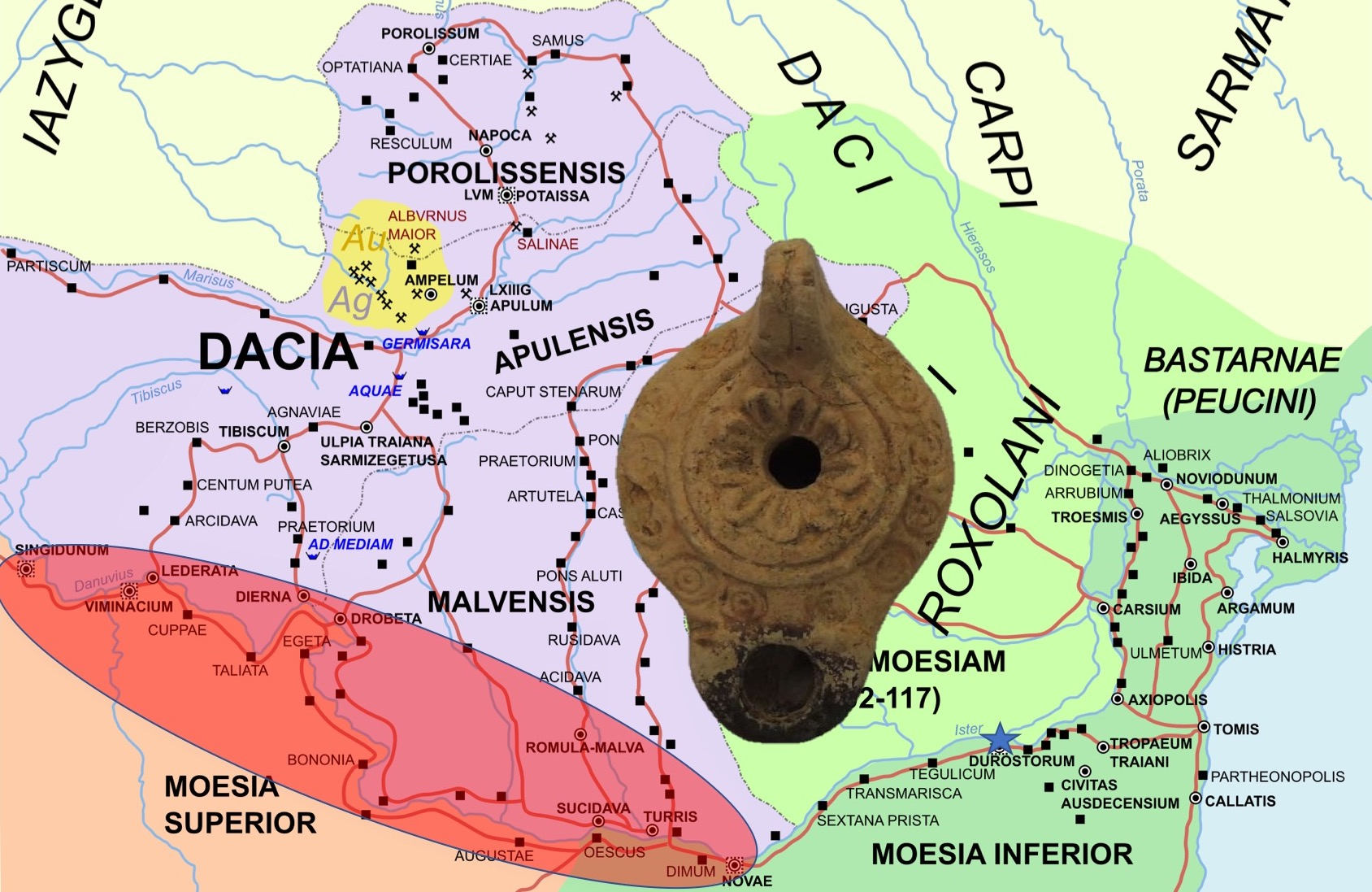
Area in red: the military, trade and hence social koinè of the early 2nd to early 3rd c. AD, as it is revealed by the specific type of lamp considered. The area where such lighting devices were found covers both sides of the Danube, and runs from Belgrade (Singidunum) to Novae (Svishtov), i.e. almost all the limes of Moesia Superior, the fortresses built on the right bank of the Danube (nowadays Romania) and the Western part of Moesia inferior, Novae being the Easternmost finding spot.
Blue star: Durostorum (Silistra), where workshops will perpetuate, since 250AD, the original form of the lamp exactly as it was created around 100AD.